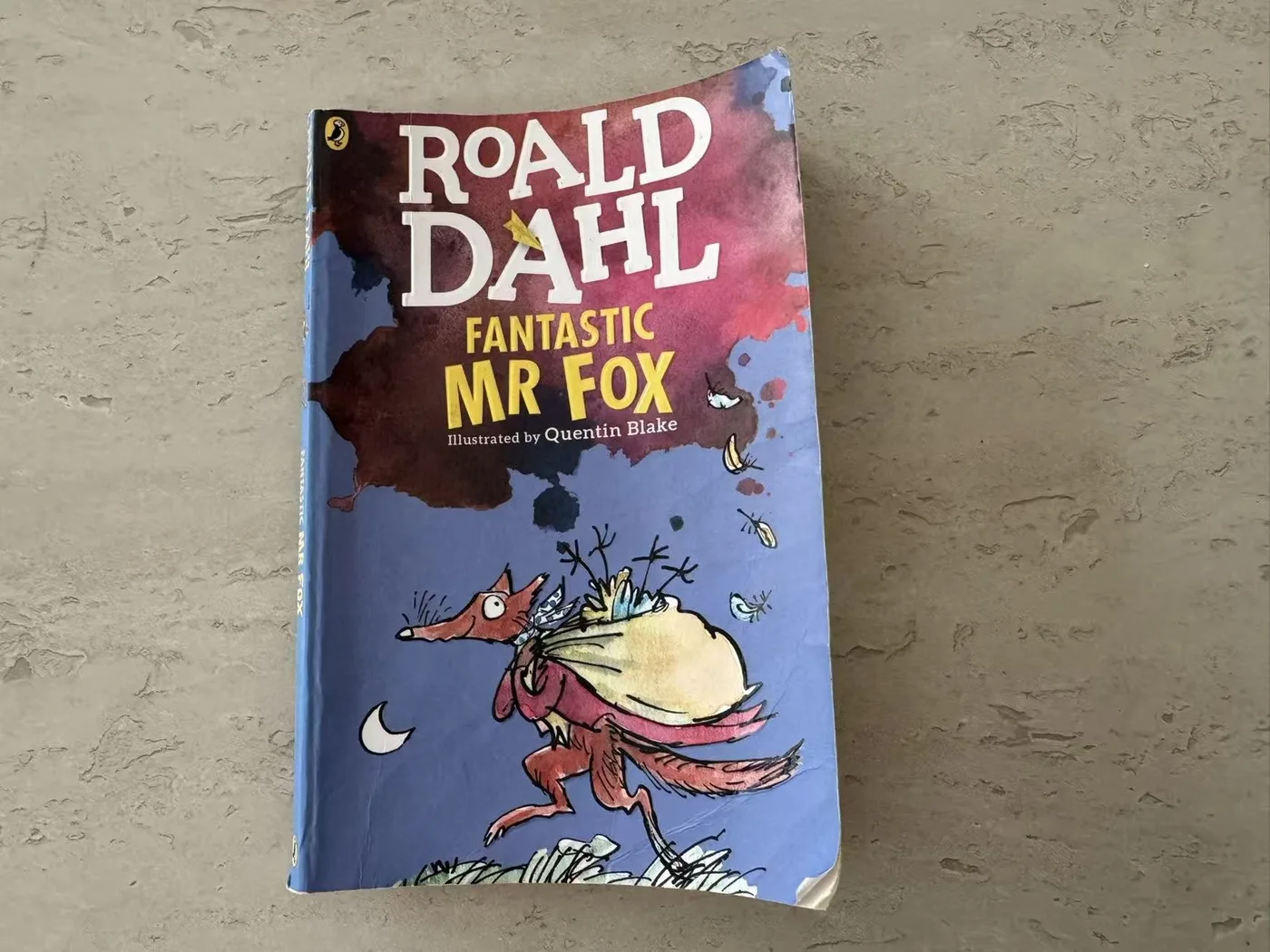
We have now reached the end of the first twelve chapters of Fantastic Mr Fox with Oliver.
Looking back, there have been quite a few small but meaningful changes along the way. At the beginning, our focus was mainly on following the story and understanding what was happening. Gradually, Oliver began to retell parts of the story in his own words and express his opinions.
There were also some lovely moments in the way he remembered and used new vocabulary.
Among the words we had explored in the first twelve chapters were:
starve to death · furious · plump
We first came across plump in Chapter 2. Then, in Chapter 11, Oliver unexpectedly used it himself while retelling the story. Seeing a word reappear naturally several chapters later was a small but rewarding moment.
To mark this point in our reading journey, I invited Oliver and his mother to share their thoughts.
From Picture Books to Chapter Books
His mother noticed a clear change in his reading interests.
He used to prefer picture books with lots of illustrations, relying mainly on the pictures to follow the story. Now, he is gradually becoming interested in English novels with more text. He has been willing to take on a chapter book like Fantastic Mr Fox, and, to my surprise, he has even expressed an interest in trying the first Harry Potter book in English.
That was something I was particularly pleased to hear.
His reading world seems to be expanding, and he is becoming more willing to explore it.
Bringing New Words into Everyday Life
His mother also shared another interesting observation.
Oliver often picks out words that he finds interesting or challenging and uses them to test his family. He enjoys sharing the vocabulary he has learned through reading and bringing those words into everyday conversations.
This reminded me of something that happened in class.
We first explored plump in Chapter 2. Several chapters later, Oliver used it spontaneously in his retelling. During this little review, he used the word again to make his own sentence.
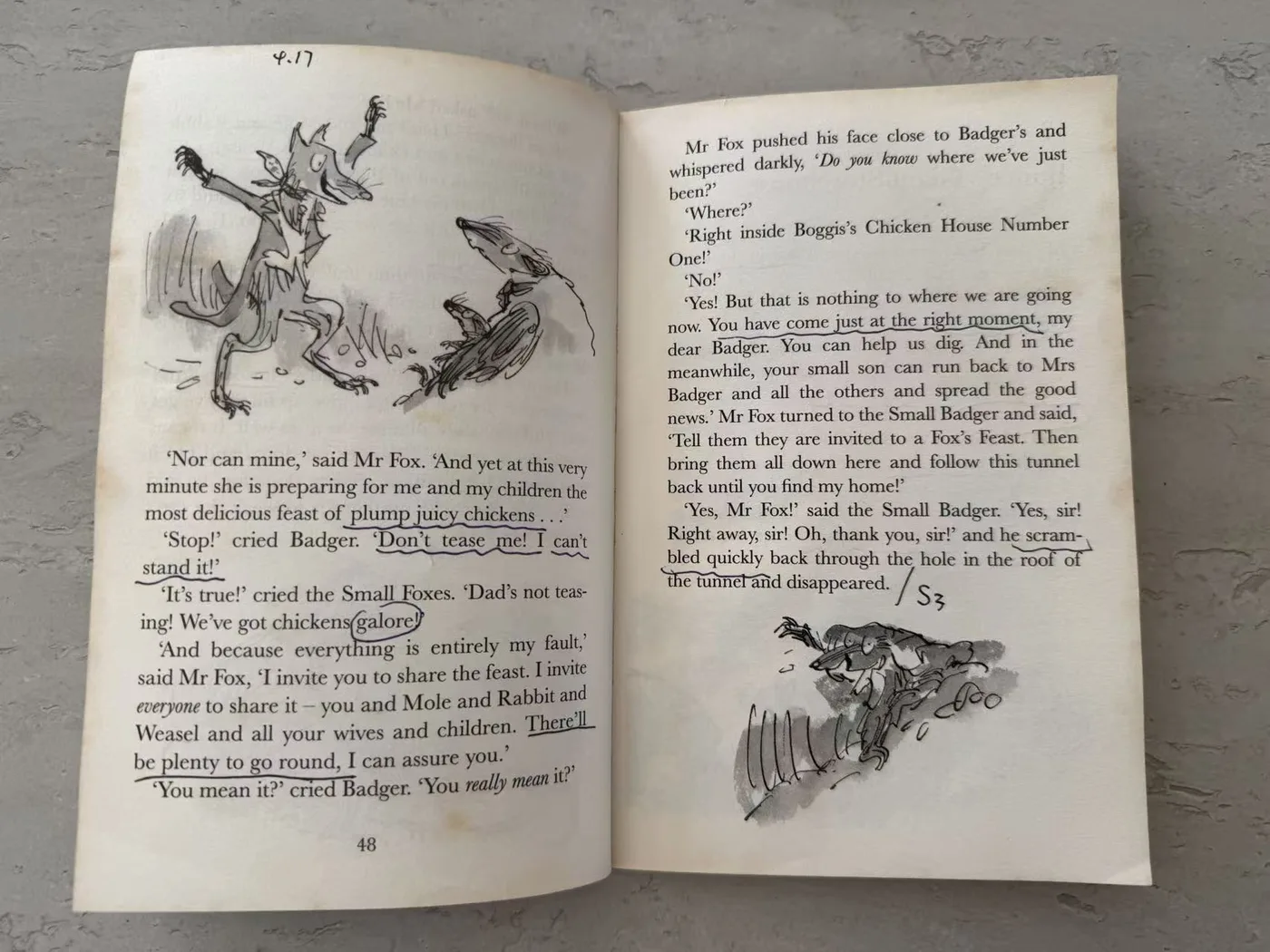
When a word comes back naturally in different situations, it becomes much more meaningful than simply remembering its translation.
Has Telling the Story in English Become Easier?
During our conversation, I asked Oliver:
“Do you find it easier to tell the story of Mr Fox in English now than when we first started?”
He replied:
“Yes, I think it is.”
It was a simple answer, but it made me happy.
At the beginning, he needed more prompts and support. Now, he is increasingly able to use his own words to retell the story. Little by little, he is becoming more confident.
One Small Step Still Ahead
There was another detail I noticed during our review.
When I asked Oliver about starve to death, furious and plump, he still tended to rely on their Chinese translations first.
This is a perfectly natural stage in learning another language. There is no need to reject translation altogether, but gradually, we can help him rely less on it and understand words more directly through story contexts, pictures and his own expression.
For example, when he sees plump, we hope he can picture the fat ducks Mr Fox brings back, rather than simply recall its Chinese equivalent.
When he hears furious, perhaps he can remember the farmers’ angry faces and imagine just how angry they were.
What we hope he will eventually remember is not only what a word means in Chinese, but also the image, feeling and situation that come with it.
Taking Our Time and Moving Forward
After listening to Oliver and his mother, I feel that the greatest achievement of these twelve chapters is not simply the number of words he has learned or how much of the story he can retell.
More importantly, his interest in English reading is changing.
He is becoming more willing to tackle longer stories, more confident in expressing himself, and increasingly ready to bring the language of books into his everyday life.
There is no need to rush through books or measure progress by how many pages we finish.
Let’s keep this curiosity alive and allow reading to remain something he genuinely wants to do.
One story at a time, we keep moving forward.
Sometimes, the most meaningful progress is not measured by how many words a child has learned, but by how much more he wants to read.
A note on names “Oliver” is a pseudonym used to protect the young reader’s privacy.
← Back to the Journal