Teaching Projects · Reading and Thinking
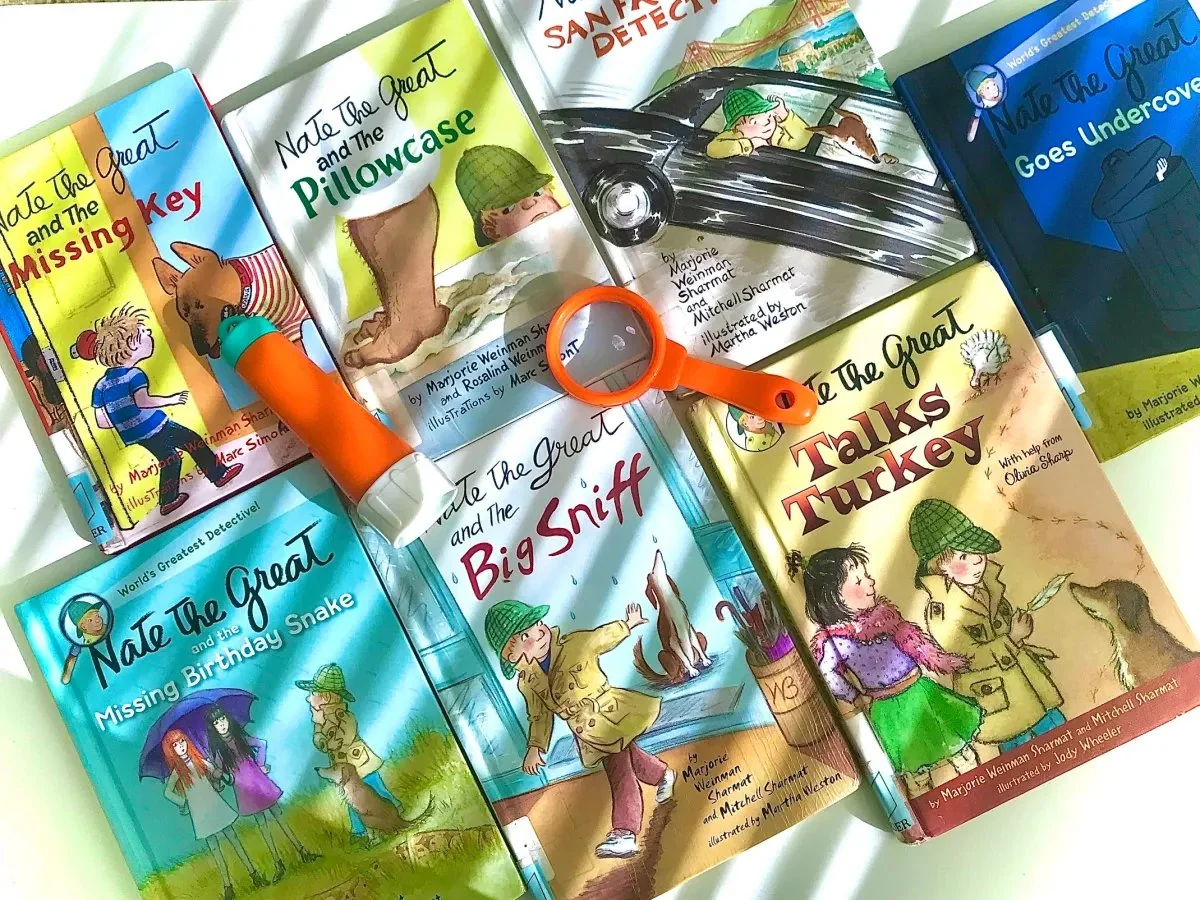
Nate the Great
Reading and Thinking

Following Mysteries, Enjoying Stories
Let the Story Lead
Reading Nate the Great is a little different from reading an informational text. We don’t follow a fixed teaching framework or stop frequently to analyse vocabulary and sentence structures.
Instead, we let the story guide us.
Each book introduces a mystery. We follow Nate as he meets unusual characters, gathers clues and tries to solve the case. The curiosity of the story naturally carries us from beginning to end.
Reading Aloud Together
We usually read a whole book in one sitting.
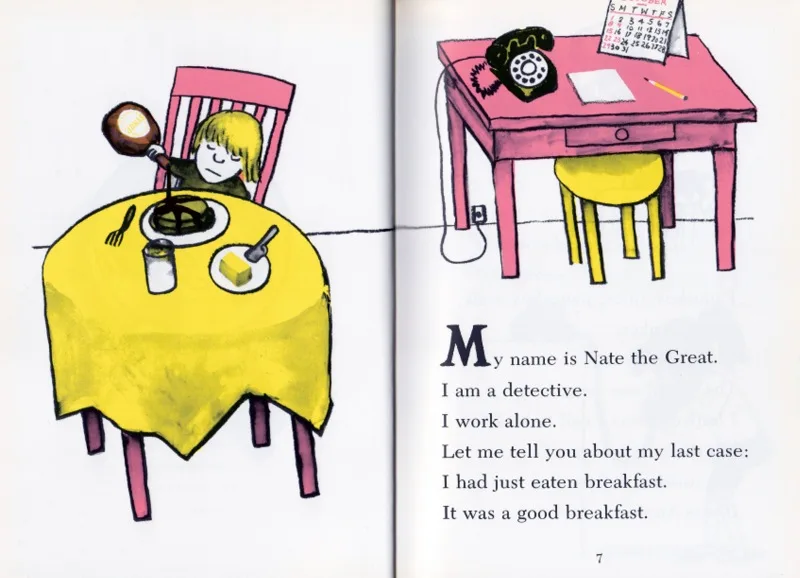
Sometimes we take turns reading aloud, especially when there is a dialogue. This gives the characters their own voices and makes the story more lively.
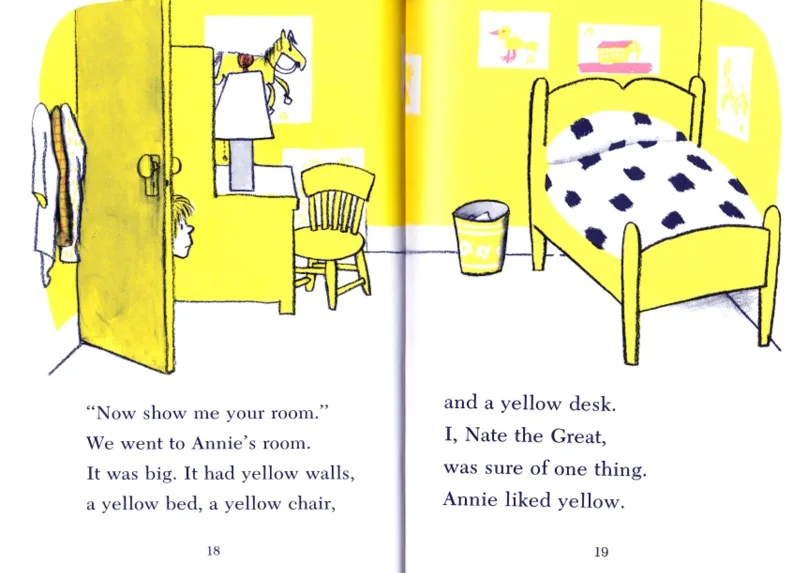
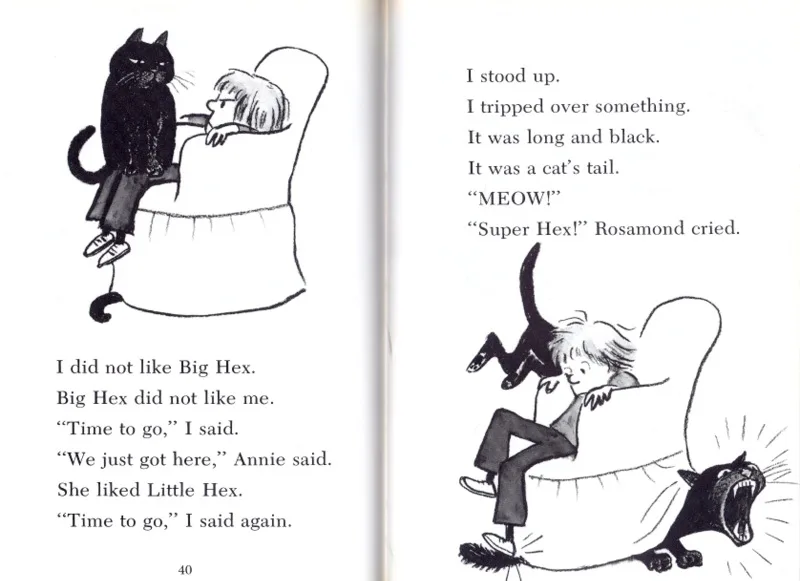
We also enjoy the illustrations. Nate and his strange friends are often portrayed in wonderfully funny ways. The pictures add another layer of humour to the reading experience.
Book
Nate the Great, by Marjorie Weinman Sharmat
How we read
One book in one sitting
Focus
The pleasure of the story
Enjoying the Humour
Part of the pleasure of reading Nate the Great is discovering the author’s playful sense of humour.
Nate’s straightforward observations, unusual encounters and amusing reactions make even ordinary situations entertaining.
Sometimes we pause to enjoy a funny moment, but we don’t need to discuss everything. More often, we simply enjoy it and continue reading.
Letting Words Find Their Meaning
When we meet an unfamiliar word or expression, we usually keep reading rather than stopping immediately to explain it.
The surrounding sentences, the illustrations and the events in the story often help us understand its meaning.
Not every new word needs to become a vocabulary exercise. Sometimes, understanding grows naturally as the story unfolds.
Following the Mystery
Every book contains a mystery to be solved.
As Nate investigates, the reader can follow the clues and make predictions, too. Who might have done it? What could have happened?
We read on to discover the answer together.
Reading for the Pleasure of the Story
Not every reading experience needs to be filled with questions, explanations or exercises.
Sometimes, the most valuable thing we can do is stay with a story, enjoy its characters, follow its twists and turns, and read all the way to the end.
With Nate the Great, we are not just practising English. We are sharing the pleasure of a good mystery.
Let the story lead.
Read, enjoy, and discover.