Teaching Projects · 01 Introduction
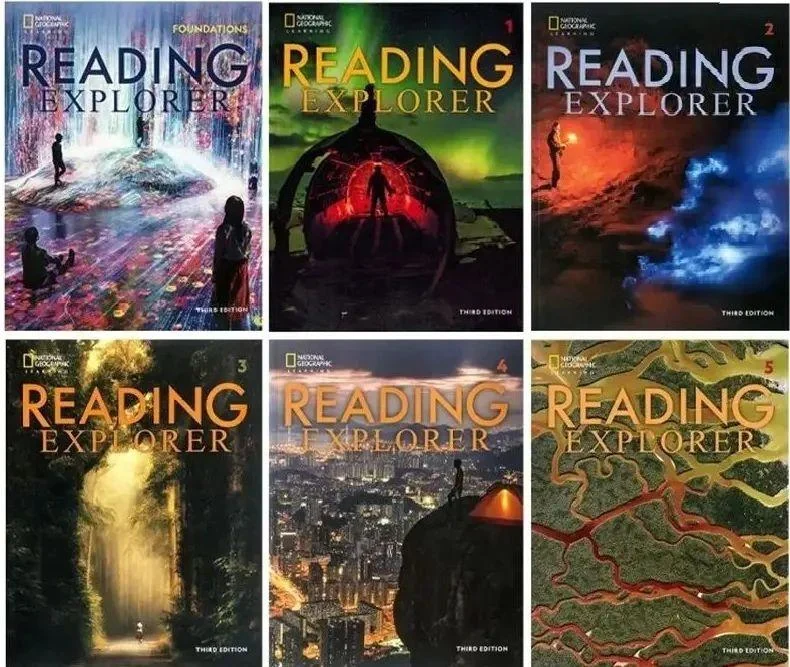
Reading Explorer
Reading Beyond the Text

Reading. Understanding. Thinking. Expressing.
Reading Explorer introduces learners to a wider world through informative texts on nature, science, culture and the world around us.
In my lessons with Ethan, I want reading to be more than understanding a passage or finding the correct answers. I want him to learn how to follow ideas, make connections, ask questions and express his own thoughts.
Our work usually takes place over two separate classes, each with a different focus.
“Ethan” is a pseudonym used to protect the young learner’s privacy.
Starting with Curiosity
Before opening the reading passage, we begin with the opening photograph and warm-up questions.
In Reef Encounters, the picture of a clownfish hiding among sea anemones gives us a natural starting point. We look closely at the image, talk about coral reefs and draw on what Ethan already knows about the ocean.
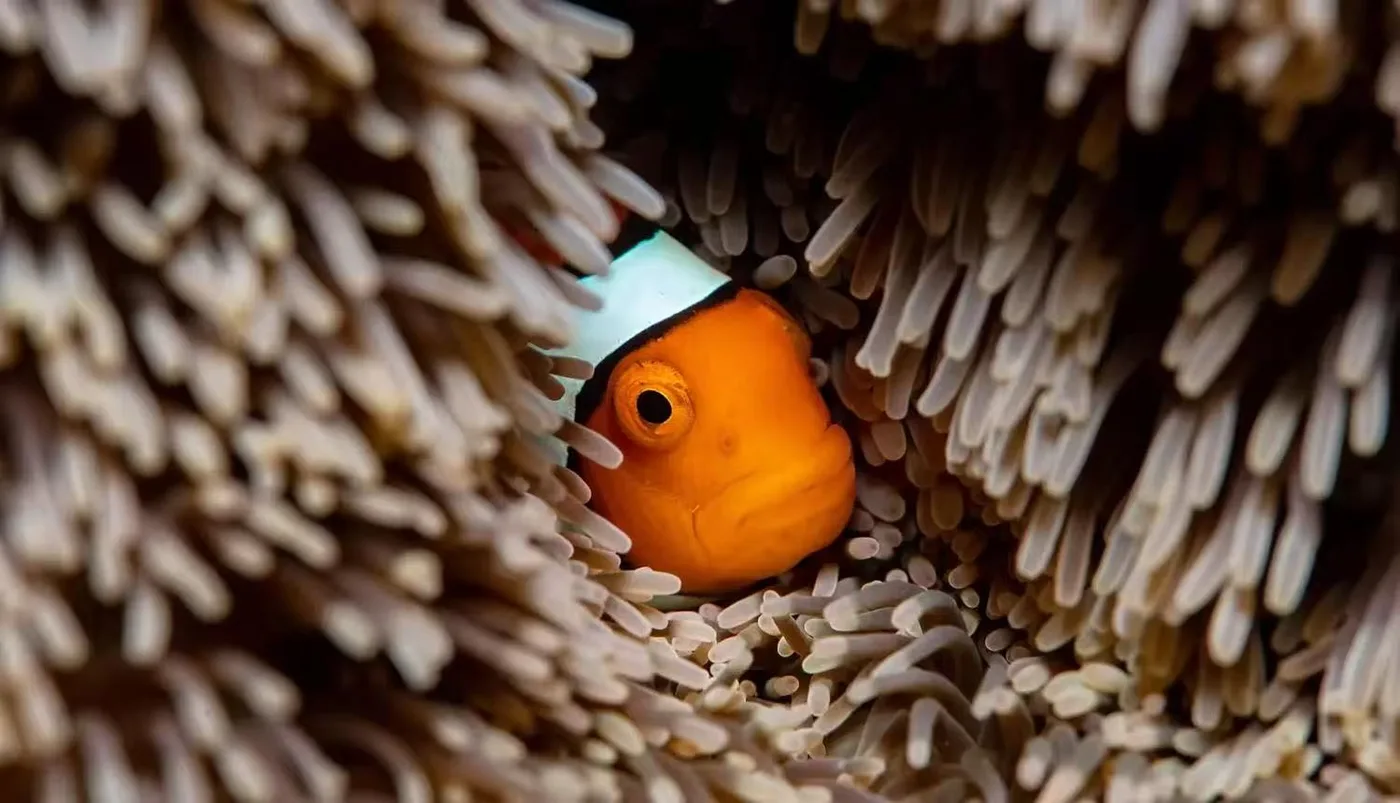
The warm-up questions also invite us to think about the threats facing the world’s oceans.
I encourage Ethan to share his thoughts freely. He can express himself in English, but when he has more complex ideas to explain, he is welcome to use Chinese. I don’t want language limitations to prevent him from thinking deeply or expressing what he really means.
After all, the purpose is not simply to practise English sentences. It is also to develop the ability to observe, question and think.
Reading begins not simply with words on a page, but with curiosity about the world.
Reading for Understanding
Our first class focuses on understanding the text and following its logic.
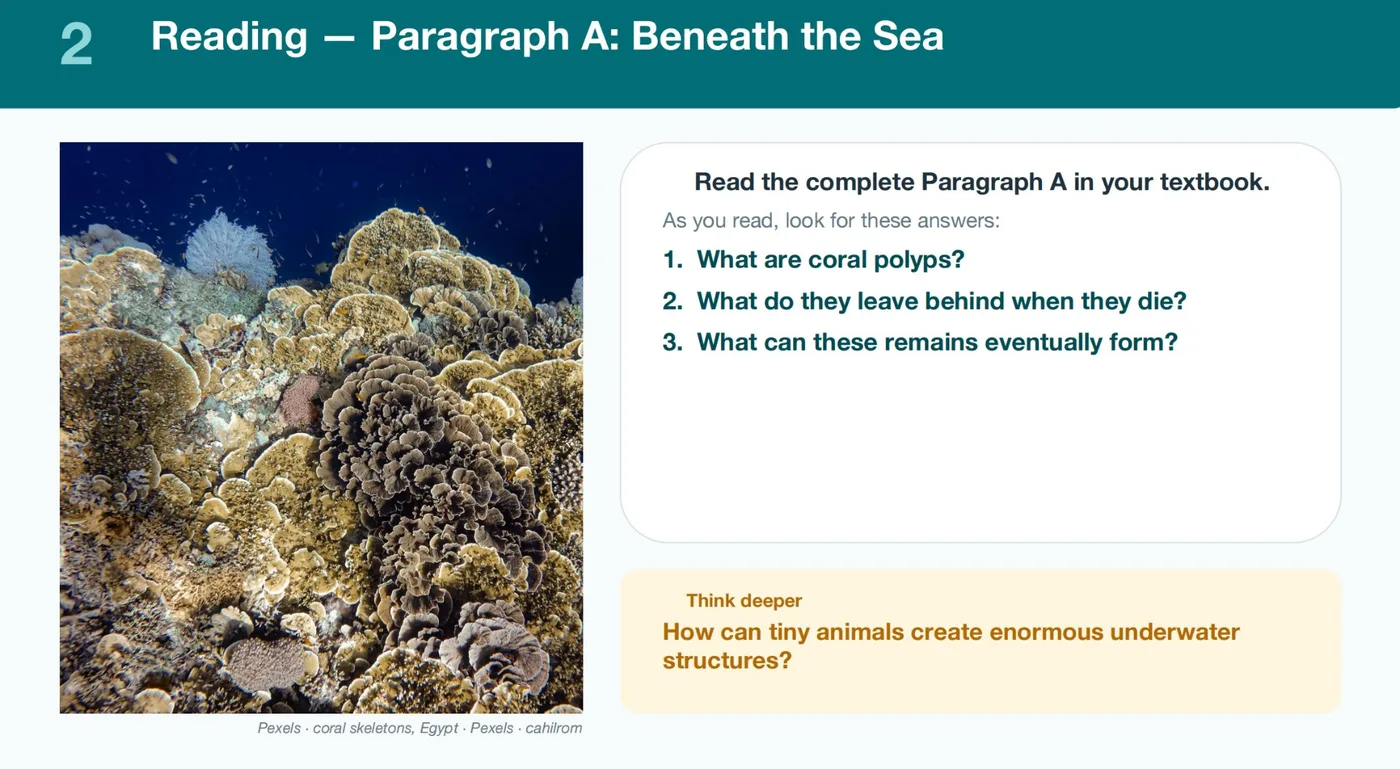
We work through the passage paragraph by paragraph. Ethan reads each paragraph independently first. After he finishes, we discuss it together.
Rather than asking him to identify the main idea straight away, I guide him through the important details and help him understand how the information is connected.
We return to the text when something is unclear, look for clues and gradually put the pieces together.
Once we have worked through the passage, we take a step back and consider its main ideas. This helps Ethan see how individual details contribute to a larger picture.
The aim is not simply to find answers to comprehension questions, but to develop a deeper understanding of what he reads.
Book
Reading Explorer, National Geographic Learning
Reader
Ethan
Lessons
Two classes per unit
Exploring Words and Expressions
Our second class focuses on vocabulary.
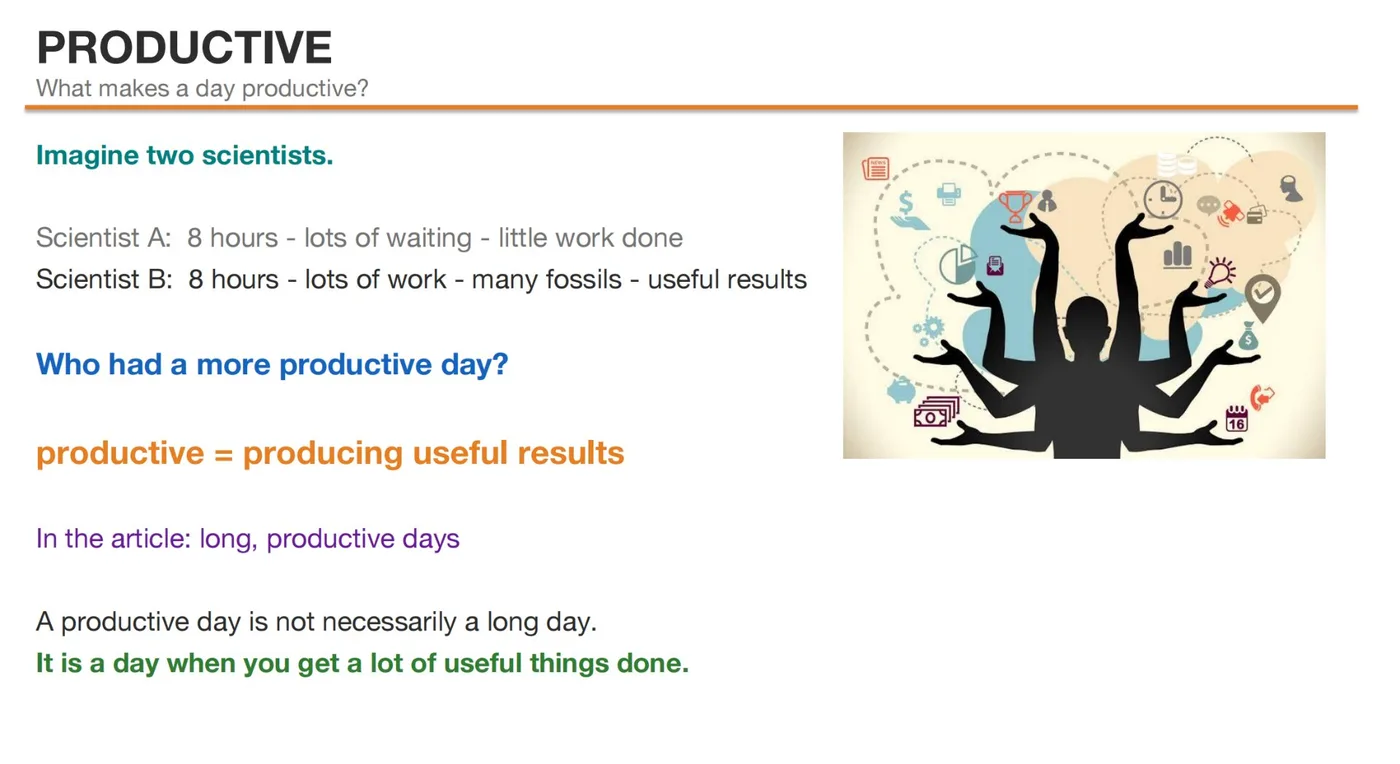
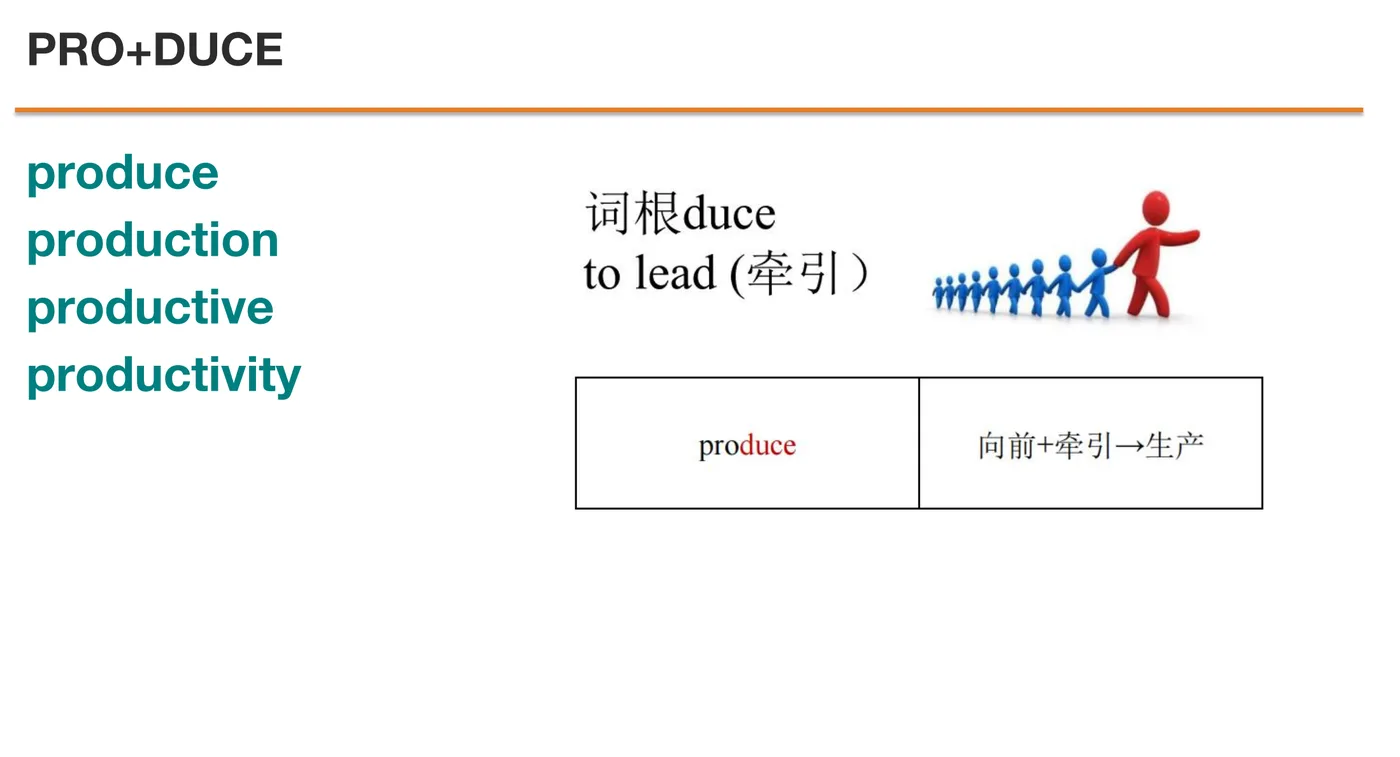
Instead of simply memorising definitions, we explore words through pictures and their internal structure — prefixes, roots and suffixes.
Visual images help connect words with meaning, while word structure helps us understand how meanings are built and how words are related.
But understanding a word is only the beginning. We then use it in our own sentences and return to the Reading Explorer passage to examine how the target word or expression is used in its original context.
In this way, vocabulary learning moves from recognition to understanding, and finally to use.
Thinking Beyond the Text
Understanding the passage is not the end of our reading.
I prepare additional questions to encourage Ethan to think beyond the information presented in the textbook. We might explore why something happens, why it matters, or how it connects with the world around us.
For example, when reading about coral reefs, we can move from learning about marine life to discussing the importance of coral reef ecosystems and the threats they face.
There isn’t always one correct answer. I want Ethan to consider different perspectives, explain his reasoning and develop his own opinions.
Reading becomes more meaningful when it gives us something to think about, question and discuss.
From Thinking to Speaking
After exploring the text and discussing our questions, I encourage Ethan to express his own thoughts freely.
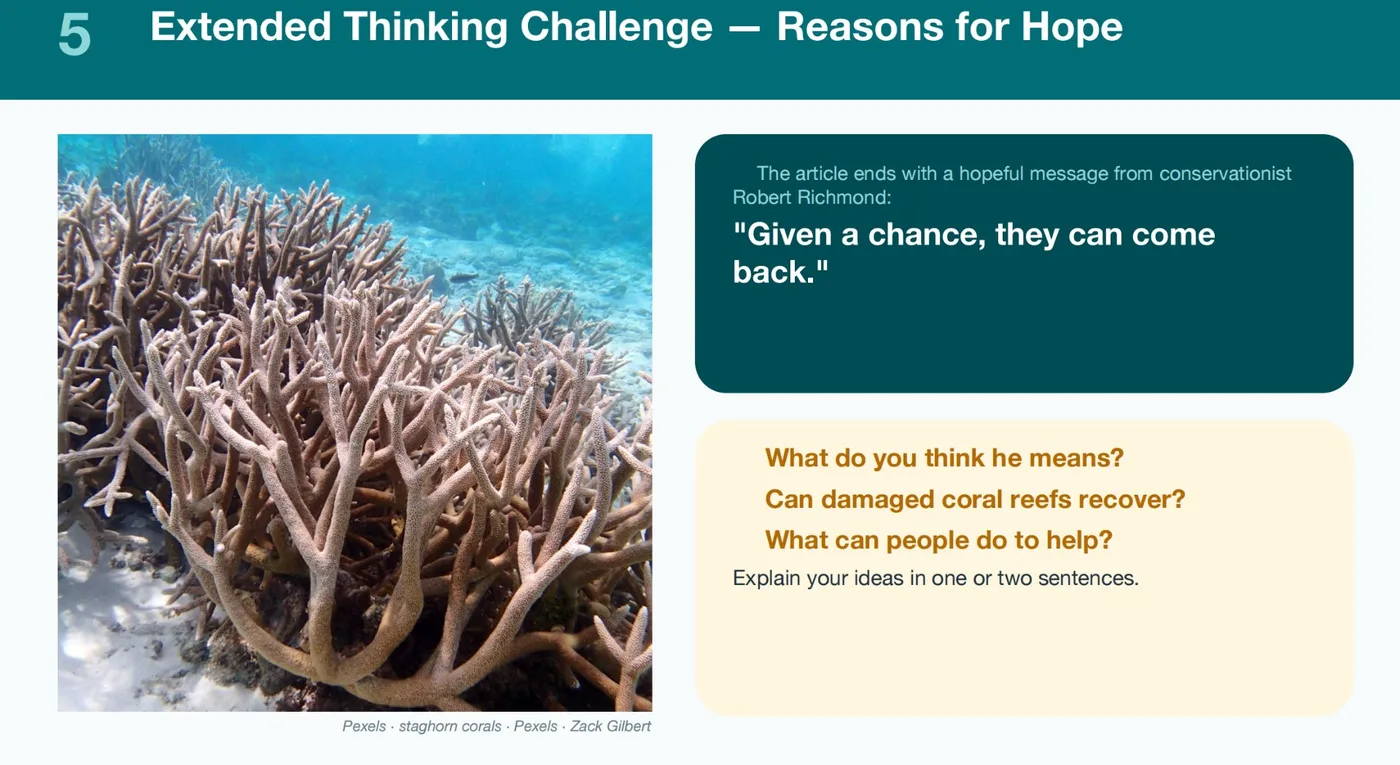
I don’t begin with a model answer or ask him to follow a fixed structure. I want to hear what he really thinks, even if his English is not perfect.
Sometimes he can express an idea directly in English. When his thoughts are more complex, he can use Chinese to explain what he means. We can then work on finding ways to express those ideas in English.
The goal is not to produce perfect sentences immediately, but to help him become more confident in sharing ideas, explaining his opinions and communicating what he thinks.
What Reading Explorer Means to Me
For me, reading an informative text is an opportunity to explore the world and develop the ability to think about it.
A learner may begin with a photograph, move through paragraphs and unfamiliar words, and eventually arrive at questions and ideas that go beyond the textbook.
From understanding information
to forming and expressing one’s own thoughts.