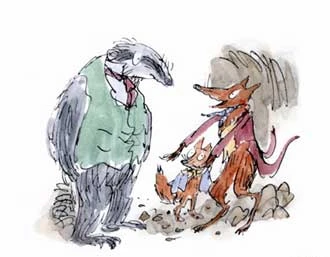
In today's reading lesson, we had two short discussions about Fantastic Mr Fox.
The first question was: Who was responsible for all the trouble in the forest?
Badger thought it was all Mr Fox's fault. Oliver also felt that Mr Fox was partly responsible. He explained:
“If Mr Fox hadn't stolen the animals, the farmers wouldn't have wanted to kill him.”
The second question was: Why didn't Mr Fox argue with Badger? Why did he apologise first?
Oliver's answer was:
“If he hadn't done that, they would have started arguing, and they might have brought the farmers down.”
I really liked both answers.
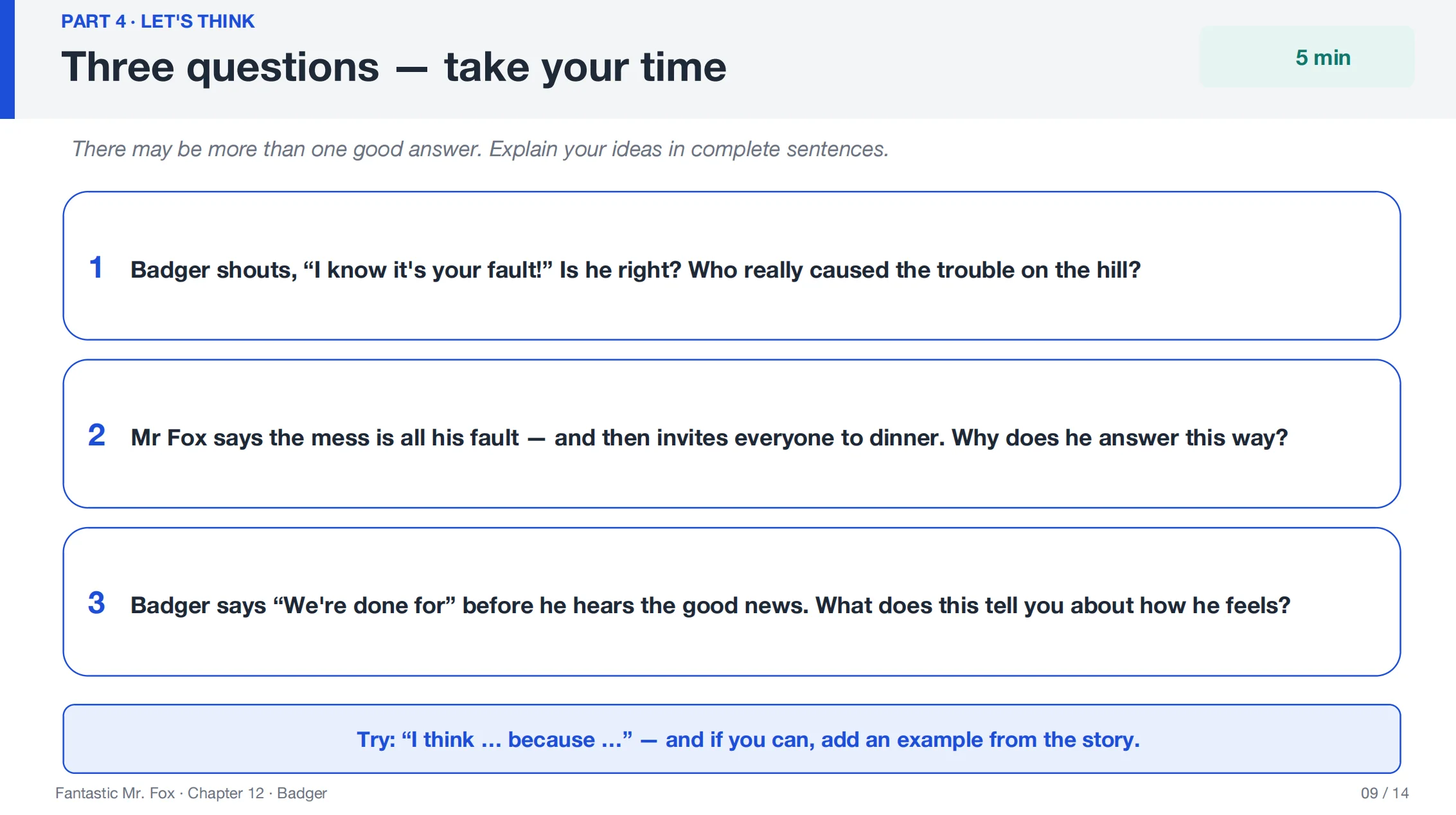
For the first question, he tried to work out who was responsible by looking at what had caused the trouble in the first place.
For the second, he began to think about the reasons behind a character's decision and what might happen as a result.
Both questions seem simple, but answering them requires a child to look for clues in the story, understand the characters' situations and explain their own thinking.
Reading a novel is not just about finding out what happens next. Through characters and their stories, children can practise making judgements, reasoning and expressing their own opinions.
We also came across some interesting expressions today, especially Dahl's own playful invention, “churgle with laughter”. His language always seems to have a few unexpected surprises waiting for young readers.
A good novel does more than make children curious about what happens next. It gives them opportunities to think about people, understand their choices and develop ideas of their own.
And sometimes, all this thinking begins with a simple question.
A note on names “Oliver” is a pseudonym used to protect the young reader's privacy.
← Back to the Journal