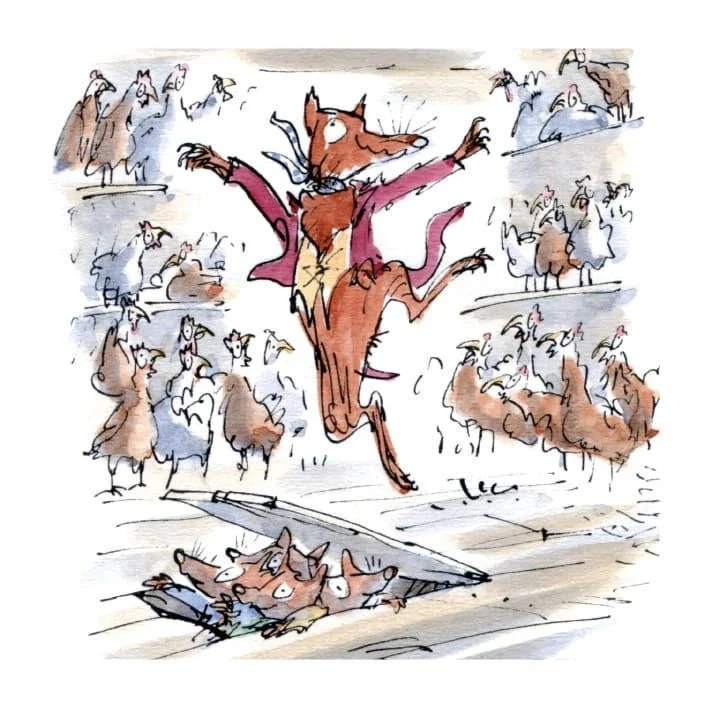
Back in Chapter 2, we learned a new word: plump.
At the time, it was simply a word we came across in the story.
Yesterday, when we reached Chapter 11, Oliver was retelling part of the story and, quite naturally, brought that word back into his own sentence:
“The little fox bring home three plump chicken, and they are from Boggis’ chicken house No. 1.”
Of course, he didn't produce the whole sentence perfectly at once. We worked on it together and adjusted it three times.
On the third attempt, I encouraged him to try once more. He took a deep breath and carefully said the sentence again.
That little deep breath was such a lovely moment.
What made me happy was that he wasn't answering an exercise that asked him to use the word plump. He was telling the story and simply found the word he needed.
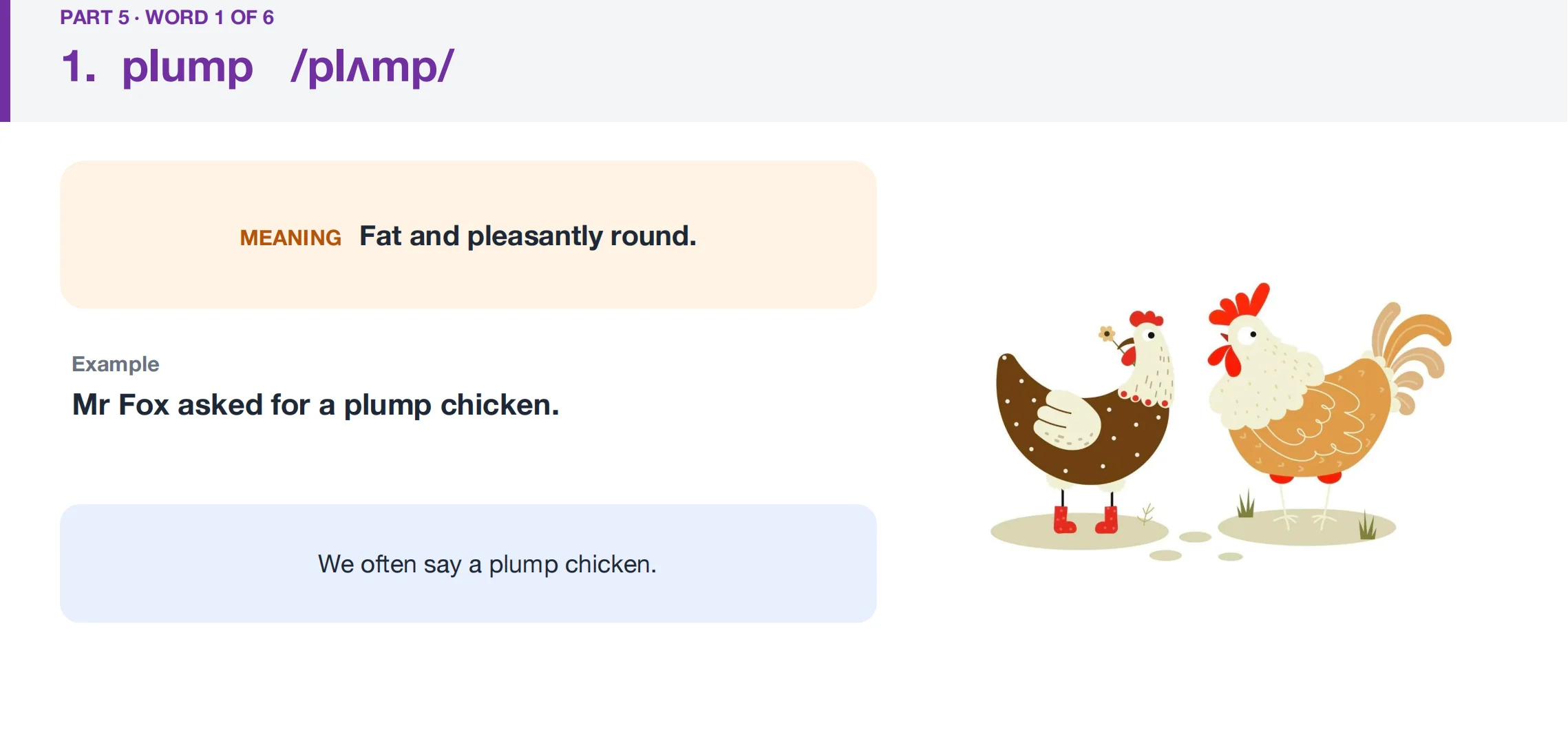
A word we had learned in Chapter 2 had travelled through nine chapters and found its way back into his expression.
This is the kind of vocabulary development I hope to see: not simply remembering a word at the moment it is taught, but being able to bring it back during later reading, thinking and speaking, until it gradually becomes part of a child's own language.
Sometimes progress doesn't show up immediately on a worksheet. It appears several chapters later, in a retelling, or in the small moment when a child takes a deep breath and tries again.
Those are the moments worth keeping.
A note on names “Oliver” is a pseudonym used to protect the young reader's privacy.
← Back to the Journal