
Something lovely happened in today's reading lesson.
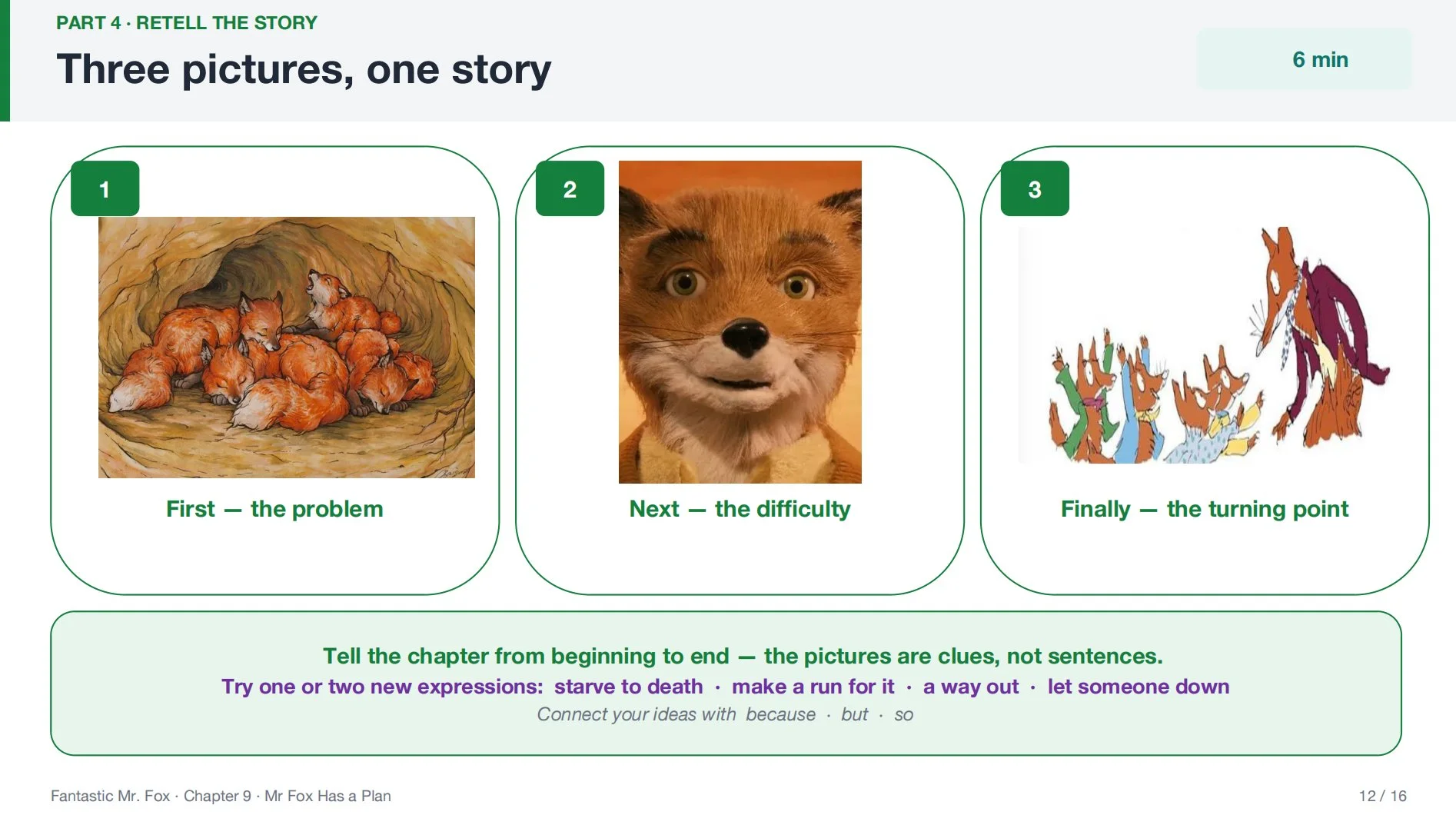
During the retelling activity, Oliver made a real step forward. Instead of simply answering my questions one by one, he began to organise the story in his own words and express what he had understood.
This time, he spoke continuously for three minutes.
Three minutes may not sound like a long time. But for a child who is still learning to express himself in English, it represents quite a lot: understanding the story, organising his thoughts, finding the right words, and gradually putting his ideas into sentences.
More than the number of words he can remember, it is this change that I value.
Later, Oliver's mother left a lovely message in our learning group. She said that Oliver had asked her to make sure she listened carefully to his storytelling that day.
That made me smile. Clearly, he was proud of himself, too.
And I think that is something worth celebrating.
When a child begins to recognise what he can do, and wants to share that progress with others, speaking English is no longer just an exercise in class. It is becoming something he genuinely wants to do.
Of course, we will keep building vocabulary, reading stories and practising expression. But there is no need to rush towards longer retellings or more complicated sentences.
Moving from answering questions to expressing ideas independently, and from saying a few sentences to telling a whole story — these are meaningful steps.
There is no need to hurry. We keep building, little by little, so that a child can grow in both confidence and ability.
A note on names Oliver is a pseudonym used to protect the young reader's privacy.
← Back to the Journal