
Today, Oliver and I read Chapter 14 of Fantastic Mr Fox.
From Learning Words to Using Them
We focused on four words and expressions in this chapter:
- doubt
- respectable
- get on with
- forward
What pleased me most was that Oliver didn't simply learn their meanings. He also used these expressions in his retelling of the story.
When a child begins to bring newly learned language into their own expression, it is a lovely sign that the words are becoming part of what they can actually use.
Is Stealing Always Wrong?
There was also an interesting conversation in this chapter.
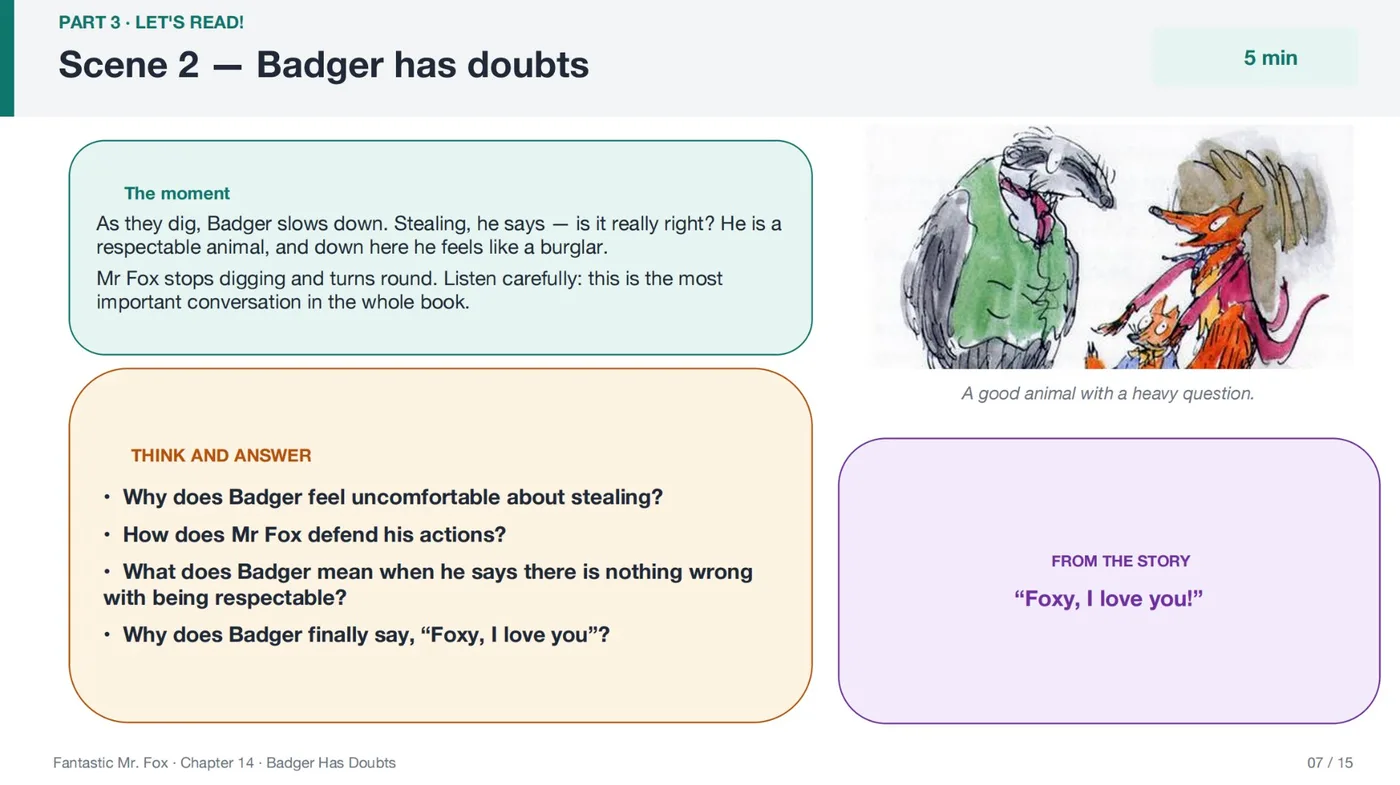
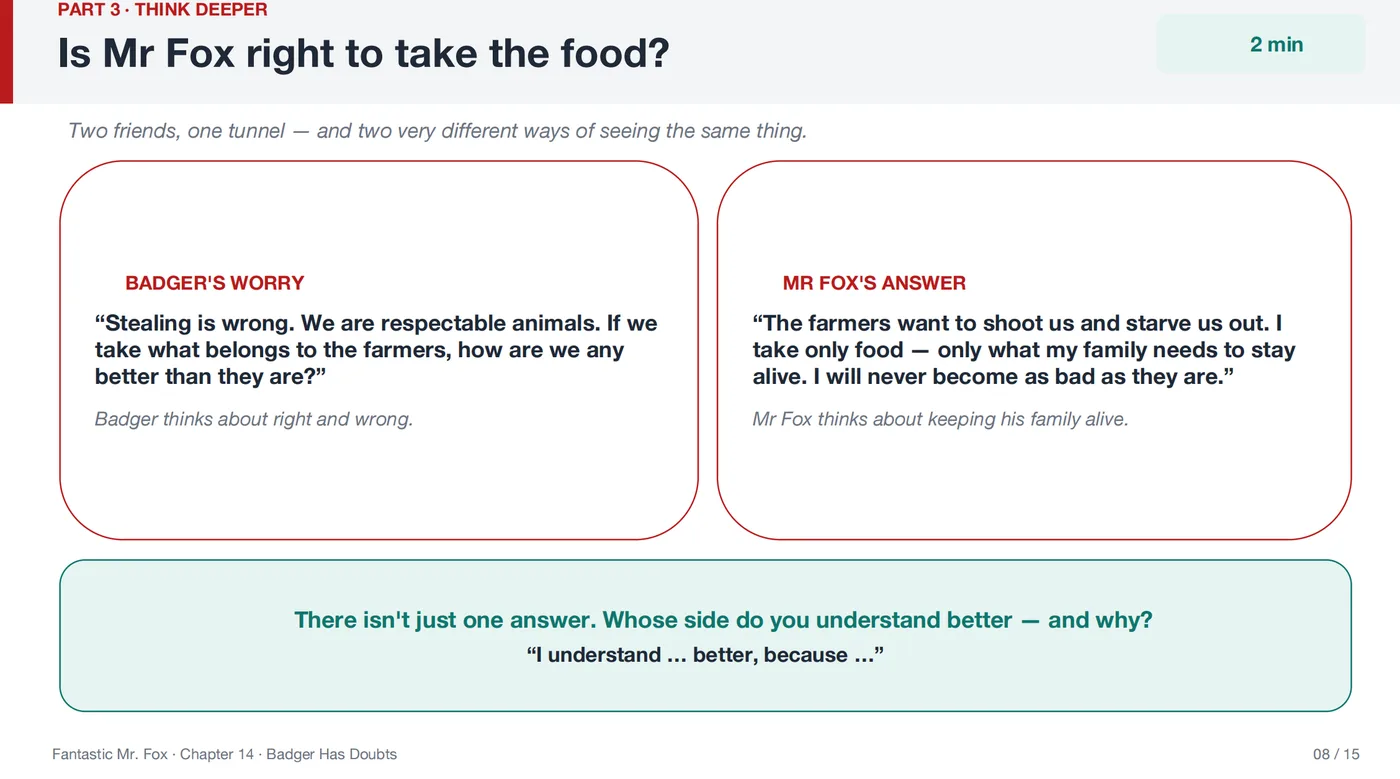
Badger believes that stealing is wrong. They should be respectable animals, not animals who take things that belong to others.
But Mr Fox sees things differently.
The farmers want to kill them, and all they have taken is a little food. They haven't intended to hurt anyone. Mr Fox believes he is simply trying to keep himself and his family alive.
After reading their conversation, Oliver and I had a short discussion.
He took Mr Fox's side. He thought that stealing could be understandable when it was done to protect one's family.
I didn't rush to tell him what he should think. I felt the question was worth exploring.
Badger has his principles, while Mr Fox is facing a difficult situation. Could the same action look different when we consider the circumstances behind it?
Reading Is Also Learning to Think
I particularly enjoy moments like this in a reading lesson.
A child is doing more than understanding what the characters say or remembering what happens in the story. He begins to notice that people can have different opinions, considers why they might think differently, and starts to form a view of his own.
A short discussion won't give us all the answers, of course. But it gives a child the chance to do something important: to think beyond the story and explain what he believes.
We will continue this conversation in our next critical-thinking and speaking class. I'm looking forward to hearing what Oliver has to say.
Sometimes, a good story gives a child more than new words and an interesting plot. It gives him a question worth thinking about.
A note on names “Oliver” is a pseudonym used to protect the young reader's privacy.
← Back to the Journal